
When most people think about crooked teeth, they think about appearance. A smile that doesn’t look quite right, teeth that overlap or twist, and a reason to avoid photos.
But crooked teeth can affect your oral health, overall health, digestion, speech, and even jaw function. Ignoring misaligned teeth can set you up for a host of problems in the future.
At Dazzling Dentistry, with offices in Chicago and Arlington Heights, Dr. Margaret Radziszewski and Dr. Weronika Dabros have helped countless patients straighten their smiles. They’ve also seen the health problems that can develop when crooked teeth go untreated. Here’s what you need to know.
The Hidden Health Risks of Crooked Teeth
When teeth overlap, twist, or crowd together, they become harder to clean. That’s a health risk, and here’s why:
- Plaque buildup. Food particles and bacteria get trapped in tight spaces where your toothbrush can’t reach. Over time, this leads to plaque accumulation, which hardens into tartar.
- Tooth decay. The bacteria in plaque produce acids that erode tooth enamel. When decay starts in hard-to-reach areas, it can go unnoticed until it becomes a serious problem.
- Gum disease. Plaque buildup along the gumline causes inflammation. Left untreated, this can progress to gingivitis and, eventually, periodontitis. Periodontitis is a serious infection that damages the bone supporting your teeth.
- Systemic health risks. Gum disease has been linked to heart disease, diabetes, respiratory problems, and even Alzheimer’s disease. The inflammation in your mouth doesn’t stay there. It travels through your bloodstream and affects your entire body.
Crooked teeth create conditions that cause tooth loss and increase your risk of serious health conditions.
Uneven Wear and Enamel Damage
Your teeth are designed to work together. When your bite is off because of misaligned teeth, certain teeth bear more pressure than others. This imbalance leads to:
- Chips and cracks: Teeth subjected to excessive force are more likely to chip or crack.
- Premature enamel erosion: Enamel is the hardest substance in your body, but it’s not indestructible. When it wears away, it doesn’t grow back.
- Sensitivity: As enamel thins, the underlying dentin becomes exposed. This can cause pain when eating or drinking hot, cold, or sweet foods.
- The need for extensive treatment: Once enamel is compromised, you may need crowns, root canals, or extractions to address the damage.
Crooked teeth wear differently. And that wear can lead to costly, uncomfortable dental work.
Jaw Pain and TMJ Disorders
When your teeth don’t come together evenly, your jaw has to compensate. The extra strain can lead to temporomandibular joint disorder (TMJ or TMD).
Common TMJ symptoms include:
- Jaw pain or tenderness
- Headaches, especially in the temples
- Clicking or popping sounds when you open your mouth
- Difficulty opening your mouth wide
- Pain that radiates to your ears, neck, or shoulders
- Locking of the jaw
Over time, these functional problems can also affect your facial symmetry and posture. Some people develop chronic muscle tension in their face, neck, and shoulders, which can contribute to discomfort and fatigue.
What this means for you: If you have unexplained headaches or jaw pain, the cause might be in your teeth.
Speech and Communication Issues
The position of your teeth affects how you form certain sounds. Crooked teeth can interfere with proper pronunciation, especially sounds like “s,” “t,” “th,” and “sh.”
For children, this can lead to speech delays or the need for speech therapy. For adults, it can cause self-consciousness in professional or social settings. If you’ve noticed that certain sounds are harder to pronounce, your dental alignment might be the reason.
Digestive Problems
Digestion begins in the mouth. When food isn’t chewed thoroughly because your teeth don’t align properly, larger food particles reach your stomach. This can lead to:
- Indigestion
- Bloating
- Nutrient malabsorption
- Strain on your digestive system
It might seem minor, but poor chewing efficiency can contribute to long-term digestive discomfort. Your stomach relies on your teeth to break food down before it gets there.
The Psychological Toll
Crooked teeth don’t just affect your physical health. They also affect your mental and emotional well-being.
A person who feels embarrassed by their smile may:
- Avoid social interactions
- Cover their mouth when they laugh
- Avoid photos
- Decline professional opportunities that require public speaking
- Feel self-conscious in close conversation
Studies have shown that people with straight, healthy smiles are often perceived as more confident, approachable, and trustworthy. While appearance should never define your worth, the psychological benefits of feeling comfortable with your smile can’t be ignored.
Your smile is how you greet the world. If you’re hiding it, you’re not showing your true self.
How to Fix Crooked Teeth
The good news is that there are several effective ways to fix crooked teeth. The right option depends on the severity of your case, your budget, and your lifestyle.
Invisalign Clear Aligners
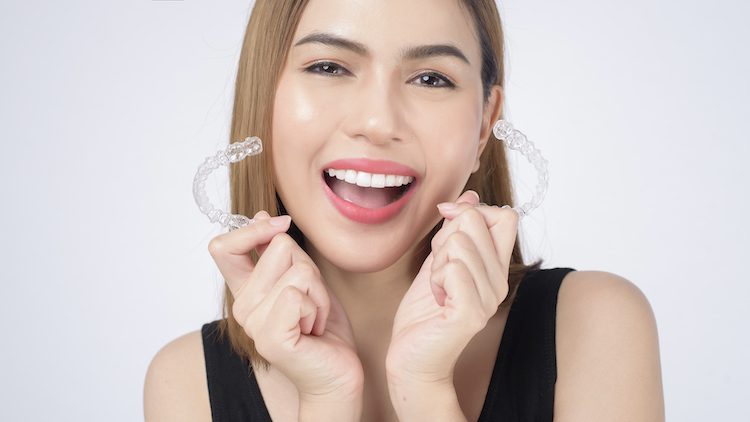
Invisalign is one of the most popular options for adults and teens who want to straighten their teeth without the look of metal braces. A series of clear, removable aligners gradually shifts your teeth into proper alignment.
They’re nearly invisible, removable for eating and brushing, and have no metal brackets or wires. Invisalign is best for mild to moderate crowding, gaps, and bite issues.
Dr. Radziszewski and Dr. Dabros are experienced Invisalign providers who can help you achieve a straighter smile discreetly. Treatment typically takes 12 to 18 months, and you’ll see visible changes within the first few months.
Traditional Braces
For more complex orthodontic cases, traditional metal braces are still highly effective.
How it works: Brackets and wires apply constant pressure to move teeth into the correct position.
The benefits: Highly effective for complex cases, including severe crowding and bite issues.
Best for: Children, teens, and adults with significant alignment problems.
Modern braces are smaller, more comfortable, and less noticeable than they used to be. Clear and ceramic options are also available for patients who want a less visible option.
Porcelain or Composite Veneers
If your teeth are only slightly crooked, veneers offer a cosmetic alternative to orthodontic treatment. Thin, custom-made shells cover the front surface of your teeth. Veneers offer instant results because the process only takes two visits.
Porcelain veneers are best for minor misalignments, gaps, and shape issues. Veneers don’t actually move your teeth. They simply create the appearance of a straighter smile. This is a great option for patients seeking a rapid transformation.
Composite Bonding
Similar to veneers, composite bonding uses tooth-colored resin to reshape teeth and close small gaps. Resin is applied to the tooth, shaped, and hardened with a special light. It’s a quick, affordable treatment completed in one visit.
Bonding is best for minor chips, gaps, and alignment issues. Bonding is a minimally invasive option that can significantly improve how your smile looks.
Which Option Is Right for You?
The best way to fix crooked teeth depends on your specific situation. During a consultation, Dr. Radziszewski or Dr. Dabros will evaluate your teeth, bite, and overall oral health. They’ll discuss your goals and recommend the most effective and affordable solution for your unique smile.
Cost and Financing
The cost of straightening your teeth depends on the treatment you choose:
- Invisalign typically ranges from $3,000 to $7,000
- Traditional braces typically range from $3,000 to $6,000
- Porcelain veneers typically range from $1,200 to $2,500 per tooth
- Composite bonding typically ranges from $300 to $800 per tooth
We are an out-of-network provider, but we file your dental insurance as a complimentary service. Our team will verify your benefits and help you understand your out-of-pocket costs before any treatment begins. We also offer flexible payment plans to make your care more affordable.
Ready to Fix Your Smile?
If you have crooked teeth, your oral health could be at risk. Whether you choose Invisalign, braces, veneers, or bonding, Dr. Radziszewski and Dr. Dabros can help you achieve a healthier, more beautiful smile.
Call Dazzling Dentistry today:
- Call our Chicago office at (872) 276-8546; located at 6941 W. Archer Ave., Chicago, IL 60638.
- Call our Arlington Heights office at (224) 328-2452; located at 102 S. Dunton Ave., Arlington Heights, IL 60005.
Request an appointment online and take the first step toward a healthier smile.