
You’ve probably got a tiny flaw in your smile that bugs you more than it should. Maybe there’s a small chip on your front tooth from that time you tripped in college. Maybe there’s a gap between your two front teeth that you’ve always hated in photos. Or maybe one tooth just looks a little shorter or more worn than the others.
It’s not a huge problem. You know that. But it’s enough to make you cover your mouth when you laugh or turn your head a certain way in pictures. You might not need veneers or braces. For small chips and gaps, a simpler option is cosmetic bonding.
What Is Cosmetic Bonding?
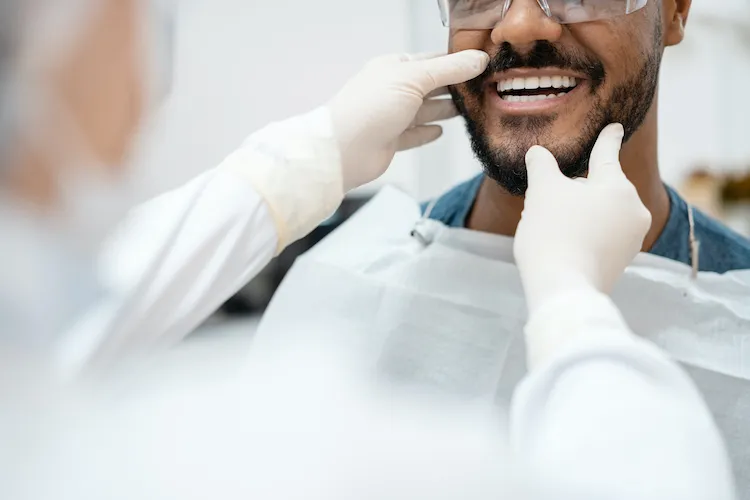
Cosmetic bonding is exactly what it sounds like. We use a tooth-colored composite resin, the same material we use for fillings, to build up, reshape, or repair your teeth. We literally bond it to your existing tooth structure.
The result is often a tooth that looks whole again. No gaps or chips. No rough edges. Just a natural-looking smile. And it usually takes just one visit.
What Bonding Can Fix
Bonding is surprisingly versatile. Here’s what we use it for most often:
- Small chips: That little broken edge on your front tooth? Bonding can rebuild it in minutes.
- Gaps between teeth: If you’ve got a small space between your front teeth, bonding can close it without orthodontics.
- Discolored teeth: If one tooth is darker than the others, maybe from an old injury or medication, bonding can cover it and blend it in.
- Worn or uneven edges: Years of grinding can wear down your teeth unevenly. Bonding can restore a more balanced look.
- Exposed roots: If your gums have receded and left part of your root exposed, bonding can cover it and reduce sensitivity.
The Process: What Actually Happens
First, we pick a composite shade that matches your natural teeth. Dr. Margaret will hold a few options up to your tooth to find the perfect match.
Then we prepare the surface. This usually just means roughening the area slightly so the bonding material sticks well. No drilling. No numbing. In most cases, you won’t feel a thing.
Next comes the artistic part. We apply the composite in thin layers, shaping it to match your tooth’s natural contours. Dr. Margaret has a background in art and music, and that eye for detail makes a real difference here. Bonding isn’t just about filling a space; it’s about making it look like it was always meant to be there.
Once the shape is right, we use a special light to harden the material. Then we polish it until it’s smooth and shiny. That’s it. You could walk out with a repaired smile in about an hour.
How Long Does Bonding Last?
Bonding isn’t permanent. It typically lasts three to five years before you need to touch it up or replace it. It can chip or stain over time, especially if you drink a lot of coffee or red wine.
But bonding costs a fraction of veneers. And because we’re not removing any of your natural tooth structure, the process is completely reversible. If you decide later that you want a different solution, you can.
Bonding vs. Veneers
If you’re dealing with small chips, minor gaps, or a single discolored tooth, bonding is often the perfect choice. It’s fast, affordable, and conservative. If you want to change the shape, size, and color of multiple teeth, or if you want results that last a decade or more, veneers might be the better investment.
Improve Your Smile Today
The best way to know for sure is to come in and let us take a look.
Got a chip or gap that’s been bugging you? Call our Arlington Heights office at (224) 328-2452 or request an appointment online. We’ll take a look and tell you honestly whether bonding is the right fix or if something else would serve you better.