
Restore Your Strength & Smile with a Custom Dental Crown
Is a cracked tooth making you think twice about enjoying your favorite meal? Do you hide your smile because of a dark, old filling or a tooth weakened by decay?
You’re not just protecting a tooth, you’re reclaiming the simple joys of eating without fear and smiling without hesitation. At Dazzling Dentistry, we see a dental crown as more than a restorative dentistry service; it’s a return to confidence and comfort.
Dr. Margaret Radziszewski, Dr. Weronika Dabros and our team combine precise skill with an artistic eye. We craft crowns that are indistinguishable from your real teeth, both in strength and beauty. Let us guide you through a simple, comfortable process to save your tooth and enhance your smile.

Is a Dental Crown the Right Solution for You?
Dental crowns are versatile caps that encase your entire tooth. We recommend them not just to repair damage, but to prevent future problems and elevate your smile’s look. Here’s how they help:
- Save a Tooth from Severe Decay: When a filling isn’t enough, a crown seals and protects the tooth, stopping decay and preventing an extraction.
- Repair a Cracked or Fractured Tooth: A crack is a ticking clock for more damage. A crown holds the tooth together, restoring its integrity so you can bite and chew with confidence.
- Protect a Tooth After a Root Canal: A root canal saves your tooth from infection, but it can leave the structure brittle. A crown provides essential strength and protection for the long term.
- Restore a Worn or Misshapen Tooth: Whether from grinding (bruxism) or simply genetics, a crown can rebuild a tooth to its ideal form and function.
- Complete Your Smile Makeover: For a tooth that’s severely discolored or doesn’t fit the harmony of your smile, a crown offers a transformative cosmetic solution. It blends in seamlessly with your natural teeth.
- Replace a Missing Tooth: A crown is a part of the dental implant procedure. It completes the restoration to restore your smile.
Your Comfort-First Journey to a Stronger Smile
We’ve streamlined the crown process into two comfortable visits to our Chicago or Arlington Heights office. Here’s what you can expect when you choose Dazzling Dentistry:
Visit 1: The Thoughtful Preparation
- Personalized Consultation: We start by listening. Dr. Radziszewski will discuss your goals, conduct a thorough exam, and take detailed digital scans (no messy impressions!) to ensure a crown is your best path forward.
- Gentle Tooth Preparation: The tooth is gently reshaped to make room for your new crown. You’ll be completely numb and comfortable throughout.
- Precision Digital Impressions: We use an advanced intraoral scanner to create a perfect 3D model of your prepared tooth. This digital file is sent to our trusted local dental lab, where your crown is handcrafted.
- Your Temporary Crown: Before you leave, we’ll place a temporary crown to protect your tooth. We’ll make sure it feels comfortable and your bite is perfect.
Visit 2: The Perfect Fit
About two weeks later, your custom crown arrives. Dr. Radziszewski will remove the temporary, ensure the permanent crown’s color, shape, and fit are flawless, and then bond it securely into place. You’ll leave with a fully restored and beautiful smile.
Patient Review
Caring for Your New Crown: A Partnership for Longevity
Your new crown is an investment in your health. Partner with us to make it last for many years with these simple steps:
- Maintain Impeccable Hygiene: Brush twice daily and floss once a day, paying special attention to the area where the crown meets your gumline. This prevents decay at the margin.
- Treat It Like a Natural Tooth (Because It Is): Avoid using your teeth to open packages or bite hard objects. While strong, your crown is not indestructible.
- Wear Your Night Guard: If you grind your teeth, wearing a custom night guard is essential to protect both your crown and your natural teeth.
- Keep Up with Professional Care: Your regular checkups and cleanings at our Chicago or Arlington Heights office are crucial. We’ll monitor the health of your crown and the surrounding tissue to ensure everything stays in perfect condition.
Frequently Asked Questions
What are your crowns made of?
We primarily use high-strength, all-porcelain or zirconia materials. Why? They provide exceptional durability for chewing, while their lifelike translucency makes them virtually indistinguishable from natural tooth enamel. We achieve a match so precise, it blends with the unique shades of your own smile.
Will it be sensitive?
It’s common to have some mild sensitivity to temperature for a week or two as the tooth settles. This typically fades quickly. Persistent or sharp pain is not normal. If this happens, call us so we can check it immediately. 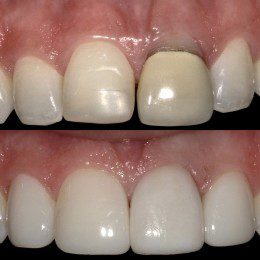
Can a crown come off?
It’s rare with modern dental bonding, but it can happen. If your crown ever feels loose or comes off, call us right away. Keep the crown safe, and avoid trying to re-glue it yourself. We can almost always recement it securely.
How do crowns and veneers differ?
Think of it this way: a crown is a full-coverage “helmet” for a tooth that needs significant structural repair or protection. A veneer is a thin, elegant “façade” primarily used on front teeth to correct color, shape, or minor alignment for cosmetic enhancement. During your consultation, we’ll recommend the option that’s right for your tooth’s health and your aesthetic goals.
Can I whiten my teeth if I have a crown?
No, the porcelain material will not whiten. If you’re considering teeth whitening, we always recommend doing it before your crown is made. This allows us to match your permanent crown to your new, brighter smile shade for a perfectly uniform result.
Let’s Save Your Tooth and Elevate Your Smile
Don’t let a damaged tooth diminish your quality of life or put your oral health at risk. A custom dental crown from Dazzling Dentistry is a lasting solution that feels and functions like nature intended.
Schedule a consultation with our dentists in our Chicago or Arlington Heights office. We’ll provide a clear, honest assessment and a comfortable path to a stronger, more confident you. Call our Chicago dental practice at (872) 276-8546, or our Arlington Heights practice at (224) 328-2452. You can also request an appointment online anytime.