
If you’re missing teeth, you’ve probably spent some time wondering what to do about it. Maybe you’ve been living with a gap for a while. Maybe you’re tired of dentures that slip or feel uncomfortable. Or maybe you’re just starting to explore your options and feeling a little overwhelmed. Either way, you’ve got choices. And the two big ones are dental implants and dentures. They both replace missing teeth, but they work very differently. Understanding those differences is the first step toward figuring out what’s right for you.
What Are Dental Implants?
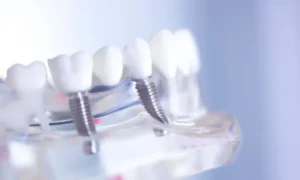
Think of a dental implant as a replacement for your whole tooth, root and all. It’s a small titanium post that we surgically place into your jawbone. Over time, that post fuses with your bone through a process called osseointegration. That’s just a fancy way of saying the bone grows around the implant and holds it firmly in place.
Once that’s healed, we attach a custom-made crown on top. The result is often a tooth that looks, feels, and functions just like your natural ones.
What Are Dentures?
Dentures are removable replacements for missing teeth. You’re probably familiar with the full set, the ones that replace all your teeth on the top or bottom. But there are also partial dentures, which fill in gaps when you still have some healthy teeth remaining.
They rest on your gums and stay in place with suction, adhesive, or metal clasps that attach to your existing teeth.
The Big Differences
The choice between implants and dentures isn’t just about preference. It’s about how you want to live your life.
- Stability: Implants are fixed. They don’t move when you eat, talk, or laugh. Dentures can shift, especially if they don’t fit perfectly. Many patients tell us they avoid certain foods, like apples or corn on the cob, because they’re worried their dentures might come loose.
- Bone health: This is the one most people don’t know about. When you lose a tooth, the bone that used to support it starts to shrink. Implants actually stimulate that bone, keeping it healthy and strong. Dentures don’t. Over time, the bone continues to resorb, which can change the shape of your face and make your dentures fit worse.
- Maintenance: Dentures come out at night. You soak them, brush them, and put them back in the morning. Implants stay in your mouth. You brush and floss them just like natural teeth. No soaking. No adhesive.
- Cost and time: Implants cost more upfront, and the process takes several months from start to finish. Dentures are more affordable and faster to make, usually just a few weeks. But dentures also need to be replaced or relined every five to ten years as your mouth changes.
Who’s a Good Candidate?
For implants, you need enough bone to support the post. If you’ve been missing teeth for a while, you might need a bone graft first. You also need to be in good general health, since implant surgery is a minor surgical procedure.
Dentures are more flexible. Almost anyone can get them, regardless of bone loss or health conditions. They’re a great option for patients who aren’t candidates for surgery or who prefer a more affordable solution.
What About a Middle Ground?
There is one. It’s called implant-supported dentures. You get a few implants placed in your jaw, and your denture snaps onto them. It’s more stable than a regular denture but less expensive than replacing every tooth with an implant. For many patients, it’s the perfect balance.
Which to Choose?
There’s no single right answer for everyone. What works for your neighbor might not work for you. The best way to figure it out is to get a professional opinion, one that takes your mouth, your budget, and your lifestyle into account.
Been thinking about replacing your missing teeth but not sure which route to take? Call our Chicago office at (872) 276-8546 or request an appointment online. We’ll talk through your options and help you find the solution that fits your life.